She
Release Date: 1996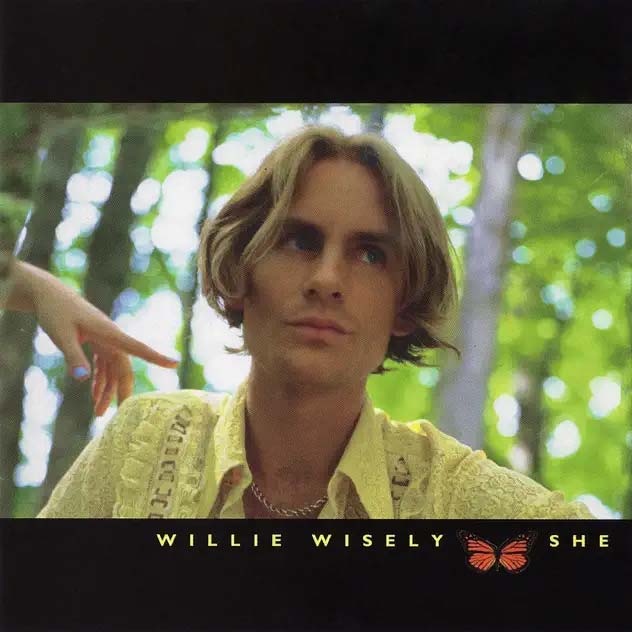
Track List & Lyrics
Click on song title for lyricsGo!
Ready To Wear
Love Is Wrong
Vagabond
Blues (All The Rage)
Sleeping With Girls
Make Love
His Eye, It’s Wandering
Loander My Guitar
Loander My Sitar
Please Don’t Talk About Me (When I’m Gone)
Working Girl
Go Faster!
Lady of Love
Album Credits
Produced & Mixed by John Strawberry Fields & Willie Wisely
All songs by William J Wisely Jr. ©1996 Wisely Publishers ASCAP except #7 ©1990 Wisely Publishers ASCAP
GO!
Ken Chastain: percussion, programming, backing vocals, Strawb: bass, programming, piano, backing vocal Steven Greenberg: drums, Mike Ruekberg: backing vocal, WW: electric & acoustic guitar, piano recorded by Steve Wiese at Creation Audio
READY TO WEAR
Peter Anderson: drums, Ken Chastain: percussion, backing vocal, StrawB: bass, electric guitar, Wurlitzer, Moog, Farfisa, backing vocal, programming, WW: vocal, electric guitar
LOVE IS WRONG
Ken Chastain: percussion, backing vocal, outro drums, keyboards, Dorian Crozier: drums, StrawB: bass, acoustic & electric guitar, keyboards, programming, Dave Fischer: trumpets, Karen Paurus: backing vocal, WW: vocal, electric guitar
VAGABOND
Ken Chastain: drums, StrawB: piano, CHamberlain, electric guitar, programming, Dave Fischer: trumpets, WW: voacl, acoustic guitar, Piano recorded by Steve Wiese at Creation Audio
BLUES (ALL THE RAGE)
Michael Bland: backing vocal, Ken Chastain: drums, percussion, backing vocal, programming, StrawB: bass, sitar, guitars, backing vocal, Brian Gallagher: saxophone, Mike Ruekberg: backing Vocal, WW: vocal, 12-string electric guitar, harmonica
SLEEPING WITH GIRLS
Jim Anton: bass, Ken Chastain: drums, percussion, StrawB: Hammond organ, programming, Dave Fischer: trumpet, Brian Gallagher: tenor saxophone, Ray Gehring: electric guitar, WW: vocal
MAKE LOVE
Peter Anderson: drum fills, Dorian Crozier: drums, StrawB: Wurlitzer, Moog, sitar & electric guitar, Donnie Lamarca: Rhodes Piano, WW: vocal, electric guitar, Aaron Seymour: backing vocal
HIS EYE, IT’S WANDERING
Ken Chastain: percussion, backing vocal, Dorian Crozier: drums, StrawB: bass, electric guitar, accordion, programming, keyboards, Mike Ruekberg: backing vocal, WW: vocal, harmonica, acoustic guitar
LOANDER MY GUITAR
Ken Chastain: drums, programming, percussion, dumbek, backing vocals, StrawB: bass, acoustic & electric guitar, piano, backing vocal, programming, WW: vocal, electric guitar, bad drum fill, Mike Ruekberg: backing vocal.
LOANDER MY SITAR
Ken Chastain: percussion, StrawB: percussion, Mike Ruekberg: sitar, WW acoustic guitar, percussion
PLEASE DON’T TALK ABOUT ME (WHEN I’M GONE)
Ken Chastain: backing vocal, percussion, mandolin, Dorian Crozier: drums, StrawB: electric guitar, keyboards, vocoder, programming, backing vocal, outro drums, Mike Ruekberg: backing vocal, WW: vocal, backing vocal, acoustic guitars, tambourine
WORKING GIRL
Ken Chastain: backing vocal, Dorian Crozier: drums, acoustic guitar, StrawB: bass, synth bass, electric guitar, backing vocal, programming, piano, Mike Ruekberg: backing vocal, WW: vocal, lead guitar
GO FASTER!
Ken Chastain: drums, percussion, talk box, StrawB: bass, piano, Andy Sullivan: harmonica
LADY OF LOVE
Ken Chastain: percussion, Dorian Crozier: drums, StrawB: bass acoustic guitar, programming, Brian Gallagher: flute, Donnie Lamarca: piano, Karen Paurus: vocal, WW vocal, electric guitar
Not since the last Posies record– if not the breakup of Wings– has a pop act created music this bright, catchy and energetic… echoes of everyone from the Amboy Dukes and Marshall Crenshaw to Stealers Wheel and Todd Rundgren…
Where do we start with this gem of a pop record?
One afternoon, in the spring of 1995, John “Strawberry” Fields visited my dilapidated apartment in Dinkytown in southeast Minneapolis. We’d not previously met. He was producing a tribute album to John Denver and wanted to vibe me out and see if I wanted to collaborate on a track. Our mutual friend, Mike Ruekberg, one of my favorite songwriters and leader of a band you should know about Rex Daisy, had told Fields about me.
Strawberrius was making stuff happen around Minneapolis. He and his uncle Steven Greenberg, the writer/producer behind the 1980 Lipps Inc. #1 hit “Funkytown” had started a record label and built out a dynamite recording studio where John honed his skills and recorded albums to feed the young label. John was a straight talker, and a words-to-action guy with musical chops that seemingly stretched to any instrument. And, everyone in town knew, he cut tracks that popped.
Below the Indian block print textiles that covered the ceiling and walls of my bedroom, I held up high a book of sheet music. Dog-eared, spine-broke, it was a cherished memento from my boyhood piano lessons, a religious reliquary, containing all the songs on John Denver’s ‘Back Home Again’ album; proof that Colorado’s poet laureate was a personal God. Since 1974, when my parents bought the 8-track cassette of the album, my favorite Denver song was the deep cut “Sweet Surrender”. Strawberrius was pleased that I wasn’t focussed the enormous hits like “Leaving On A Jet Plane” or “Calypso”. And so within weeks we were at Funkytown Studios in Golden Valley cutting the track with drummer Dorian Crozier and a guest artist I’d invited to sing and play piano, John Eric Thiede, founder of the popular jump/swing group The Strawdogs.
The idea was to give the song a bluesy shuffle, leaving room for plenty of improvisation. Thiede was a riot, singing duet with me in his Satchmo voice, banging out barrelhouse riffs on the 88’s and chubby repartee between lyrics. Strawberrius & Dorian blew me away, cutting the track completely live, in 2, maybe 3 takes tops. John produced with one hand, and played bass with the other from behind the control room glass – a polymath. I’d never recorded with such ease and speed.
We ended the night with beers at Bennington’s Bar next door. As we drank and geeked out about music, I remember feeling like a new chapter of my life was being offered up. And I could walk through the portal… or not. Within a few months, around the release of ‘Minneapolis Does Denver’, Strawberrius called, wanting to know if I had songs written for a new record. He suggested signing me to his and Unc’s October Records. I told him I’d throw some demos on a cassette and pop by the studio.
My only memory of that meeting was John pinning me to a psychedelic-colored, fabric wall outside the control room, him looking me in the eye, pointing his finger at my chest, demanding to know, “Are you a star?” Full discloser: he denies having said this.
Now, please realize that Garrison Keillor’s depiction of Minnesota in his Lake Wobegon tale, isn’t just the fantasy of a folksy poet/radio host. It’s a real thing. People who speak bluntly around here are rare and often squelched. Humble pie is the state hot dish. So, my response to John’s question was a luke warm “yeah, sure” – which apparently was enough to pass the audition.
In the coming weeks StrawB called and said he was digging the demos. Later I’d find out that he’d shared the cassette with Ken Chastain, leader of the fiercely funky band Beat The Clock. Ken was and remains a powerhouse on stage, a versatile and exacting player. And for years my Willie Wisely Trio had toured the same midwest bar circuit as Beat The Clock, even taking turns playing a shabby naval base bar in the Virgin Islands called Barnacle Bills. Every BTC show was a master class and rising to their musical level was a challenge faced by any local band who shared a stage with them. So, for John to have Ken behind the curtain was huge, and the three of quickly found an anything-goes creative process with Ken playing all over She.
But before anything could be recorded, “Unc” had to come check out one of my gigs. It was at the Loring Bar, long on vibe but short on a PA suited for a pop band. I recall the gig being particularly shambolic, without my usual rhythm section. Nonetheless, by early 1996 I had signed a two record deal with October. Me and Mike Ruekberg, Dorian Crozier, Ken & StrawB were the core of what would become She – notably with Unc playing drums on track one “Go!”
For many reasons, making the record was memorable. One, fourteen tracks took about that many days to complete and mix. Very fast in age of tape.
Two, John worked with such derring-do that often all I could do was laugh in awe as he played gymnastic parts in one or two takes. What would’ve taken me days, took him minutes.
Three, when we first met over John Denver, StrawB had glimpsed my hulking collection of vinyl records, covering a wall of my bedroom – the result of being a used record buyer at The Wax Museum record store in Dinkytown. John suggested I start pre-production by ripping crusty groove samples from vinyl to a DAT tape machine. While this had been a long-established work mode for OG rap producers, the Dust Brothers and others, it was certainly not standard for pop rockers with tightly-knit, Beatlesque song craft like me. So, as John manipulated the samples on primitive software, creating sonic references to anything in music history, re-pitching single notes, syncing disparate recording devises, all while playing and engineering live performances, we began to understand that this was something fresh.
The most indelible aspect of the sessions was the ‘yes’ mentality – that anything was possible, and whatever was suggested could also be achieved: rumbas, swing, Mersey beat, gospel, show tunes, thrashing rock, ersatz raga, Philly soul, spontaneous poetry and carnival barking; without being nostalgic to any particular era or artist.
My earlier records had also been stylistically diverse, but this was putting it all into living color and teaching me to understand music making at a deepening level. Of course growth is often a fearsome and uncomfortable process. And I worried that John was changing the music vision I’d so carefully crafted on previous albums and through touring 100-plus gigs a years. I cherished my Trio’s reputation for wild shows and scrappy presentation. But now here was a record producer telling me the slop and pitchy-ness should be fixed, which is hard to do when I’d never realized that I COULD DO BETTER. At many points, the education got me feeling low about my abilities; working on take 10, 11, 12 of a guitar solo with John at the board, punching in, rewinding, punching in, rewinding, losing his patience, trying to talk me through something that he can hear, but that I cannot.
As far as singing. He was the first person I ever heard that used the word “pitchy”. He was ruthless about singing in tune; which of course is no problem these days with digital tuning software. But this was the two-inch tape machine era. And John had me re-singing, while he’d be grabbing single syllables and words from my repeated performances, on the only remaining open track for a vocal. We were as likely to improve a performance as we were to erase something irreplaceable. As they say in filmmaking, he was ‘editing in camera’ – not ‘in post’ scrolling through twenty takes of colorful sine waves on a glowing computer screen. In this analog era, John’s work was precociously granular.
I remember a couple grudge sessions between us, sometimes ending with him acquiescing, or me biting my tongue as something that I hadn’t anticipated went to tape. But in the struggle and compromise is the brilliance. And during our initial listen of the completed tracks, realizing that She might be something remarkable, I turned and said to John, “wow, a million little decisions made this.” The simple thought still resonates whenever making art. Nothing happens in an instant, it’s always the accumulation and sequence of events.
She was our chance to explore the boundaries of creative impulse; the opportunity to work at the juncture of new technologies, unconventional processes, new friendships and colorful songs that all came together in a way I’ve tried to replicate ever since.